Male Study
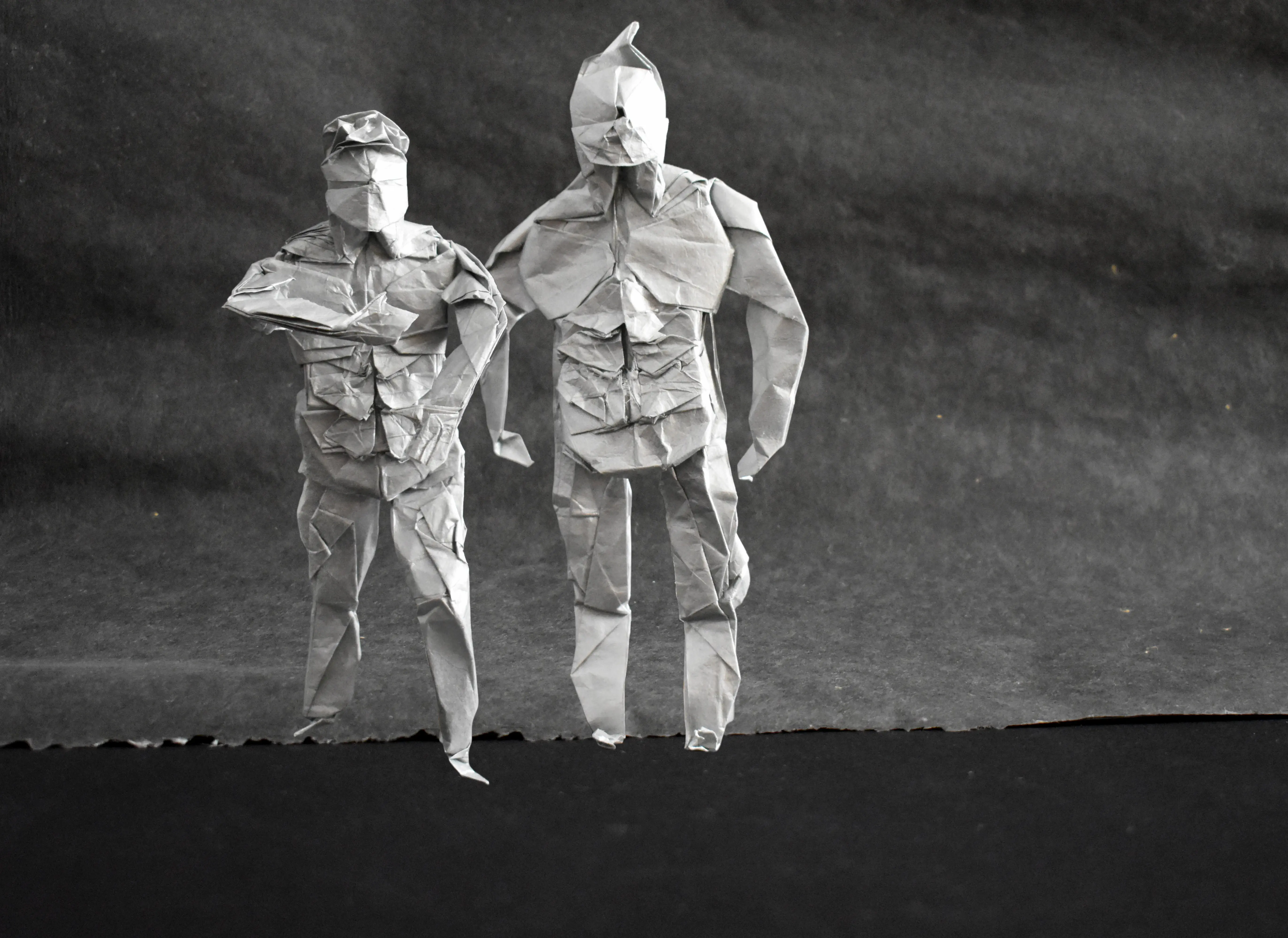
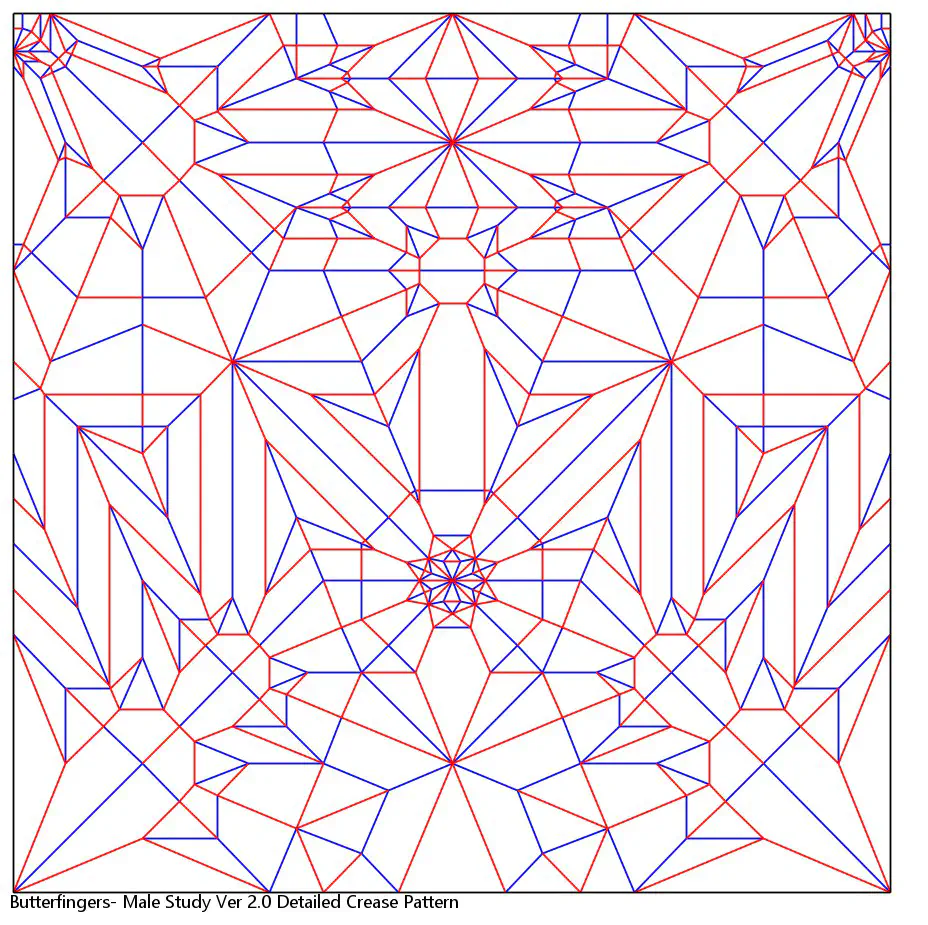
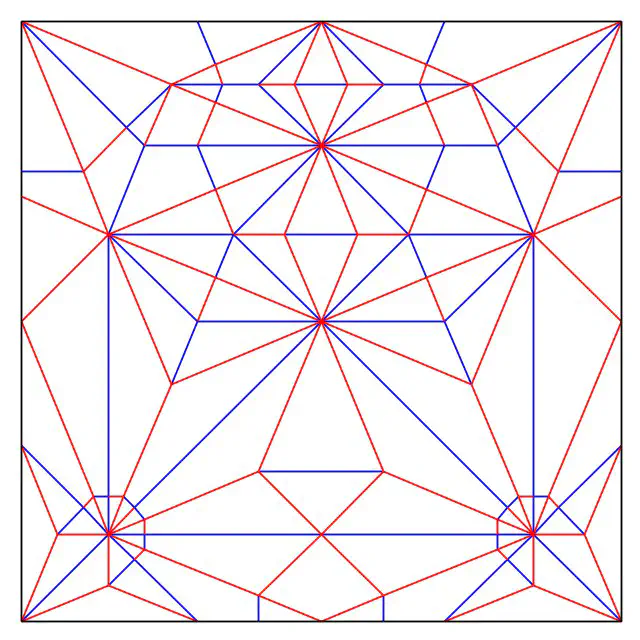
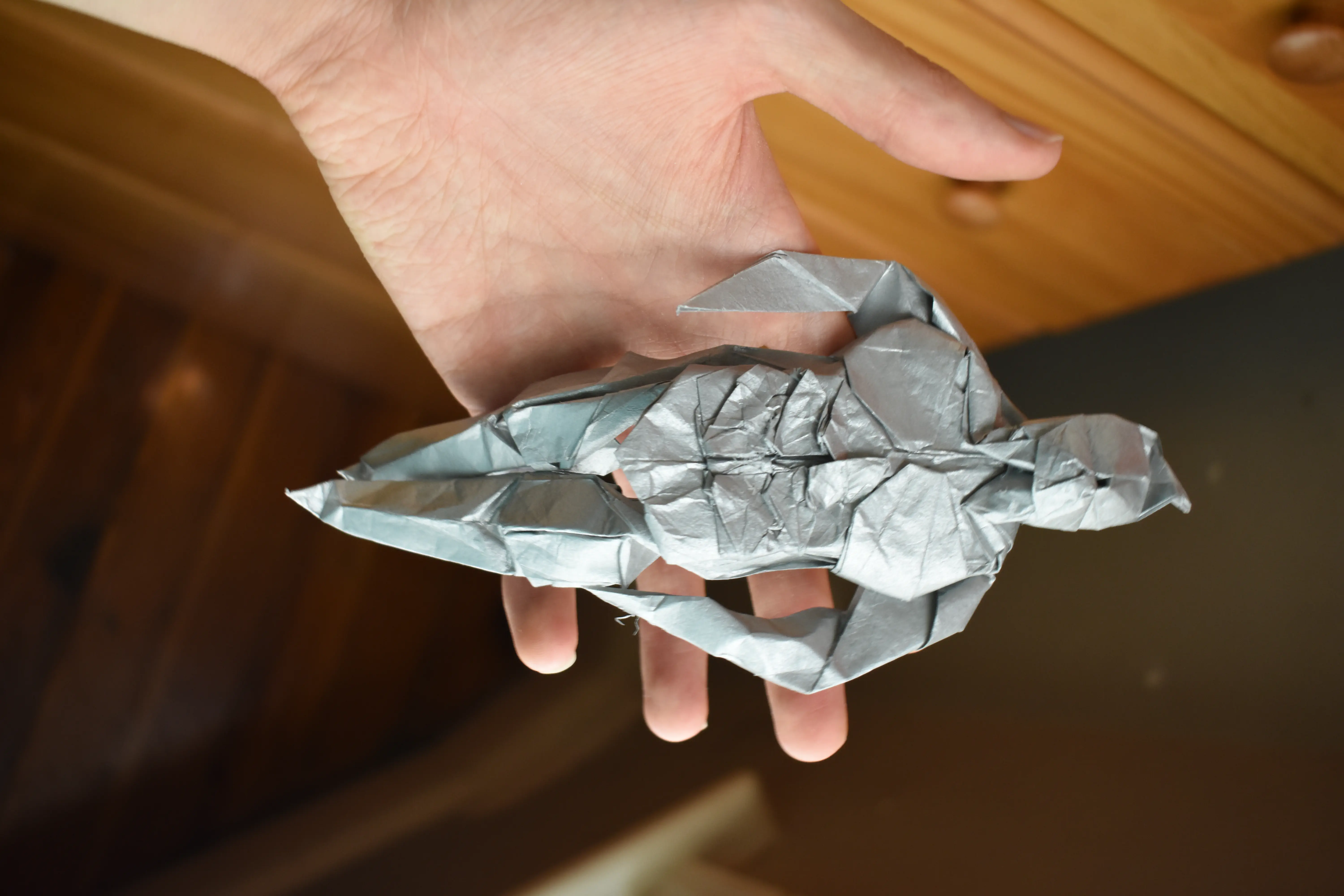
These two models represent a major step forward in terms of my understanding of 22.5 degree structures. Originally intended as simple studies in musculature, they eventually became something I’m rather proud of. Thanks go out to Crascodyllea who very generously found several possible references for the graft in version 2.0.
More and more, my designing process is turning into a rapid blur of vomiting out ideas into Oriedita and using the advanced drawing tools to streamline their actualization. Rapid-fire sparks of inspiration can be realized in moments, and as I have improved, the number of mistakes I make reduce. The drawn-out periods of wracking my brain and clutching my hair in distress that characterized my earlier processes have nearly vanished. This is quite the lucky stroke for me, but it makes articulating what I did, how I did it and why difficult.
So here’s my best shot.
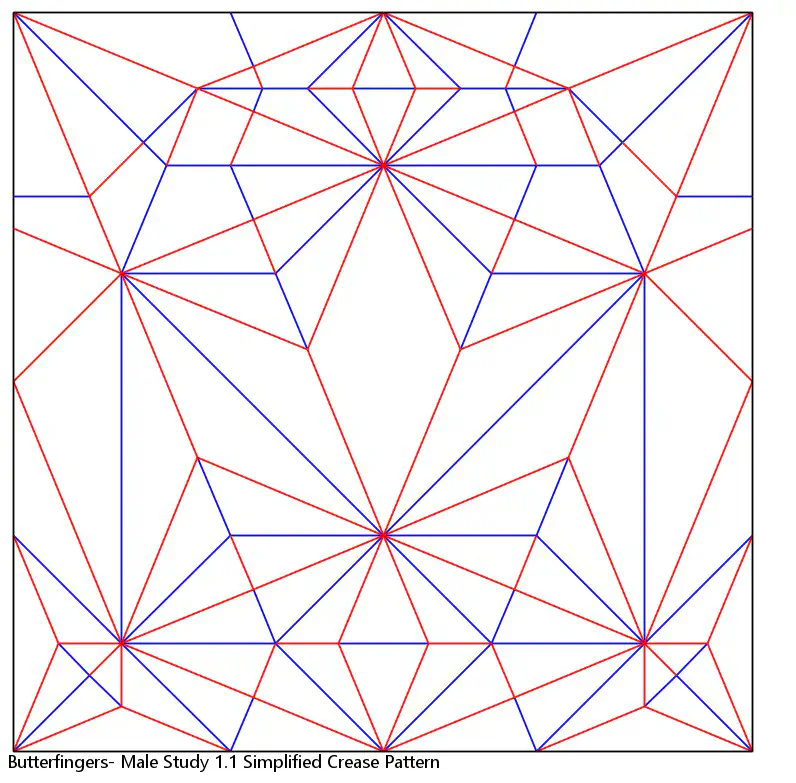
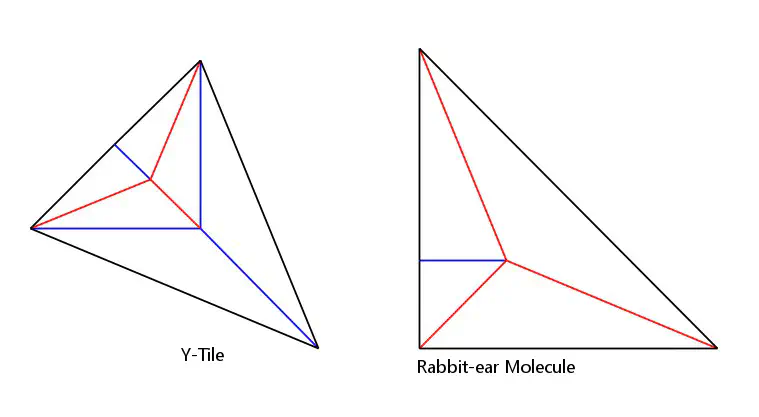
The first thing I did was slap together several classic 22.5 molecules and tiles in Oriedita. My go-tos were the three flapped y-tile, which has one flap much longer than the others and the three-flapped rabbit-ear molecule which has one flap much shorter than the others.

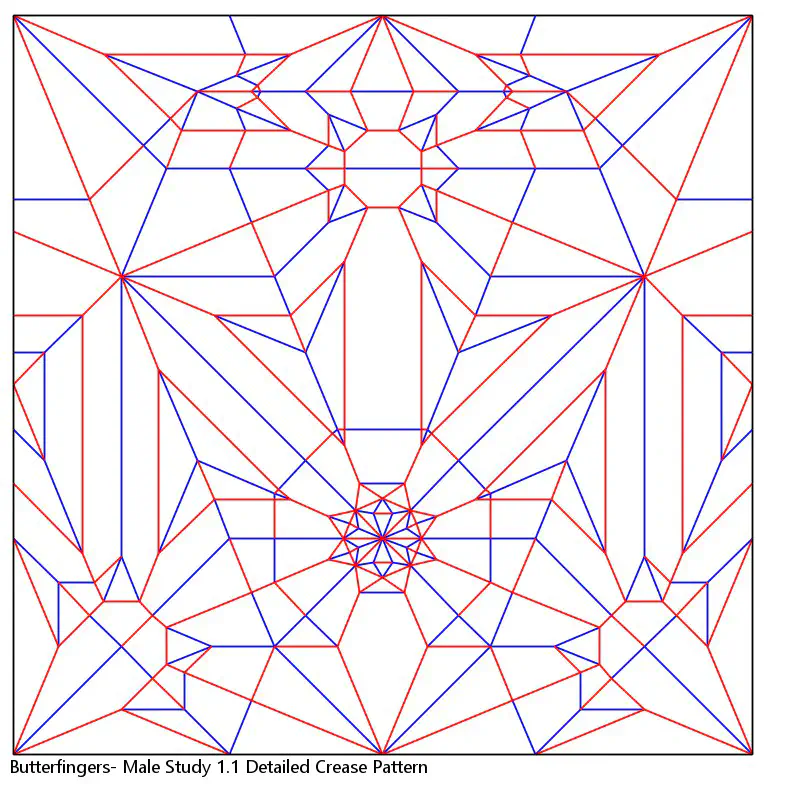
I knew that I needed two flaps for the arms, two for the legs, one central flap to point split for the abdominal muscles and another flap or two for the head. Once I had arranged the molecules, I extended stray creases until they reached the edge, drew in the hinge creases and began a test fold.

I immediately realized that the abdominal muscles ended up too high up on the torso. I came back to the drawing board and using the same molecules, found a new structure.
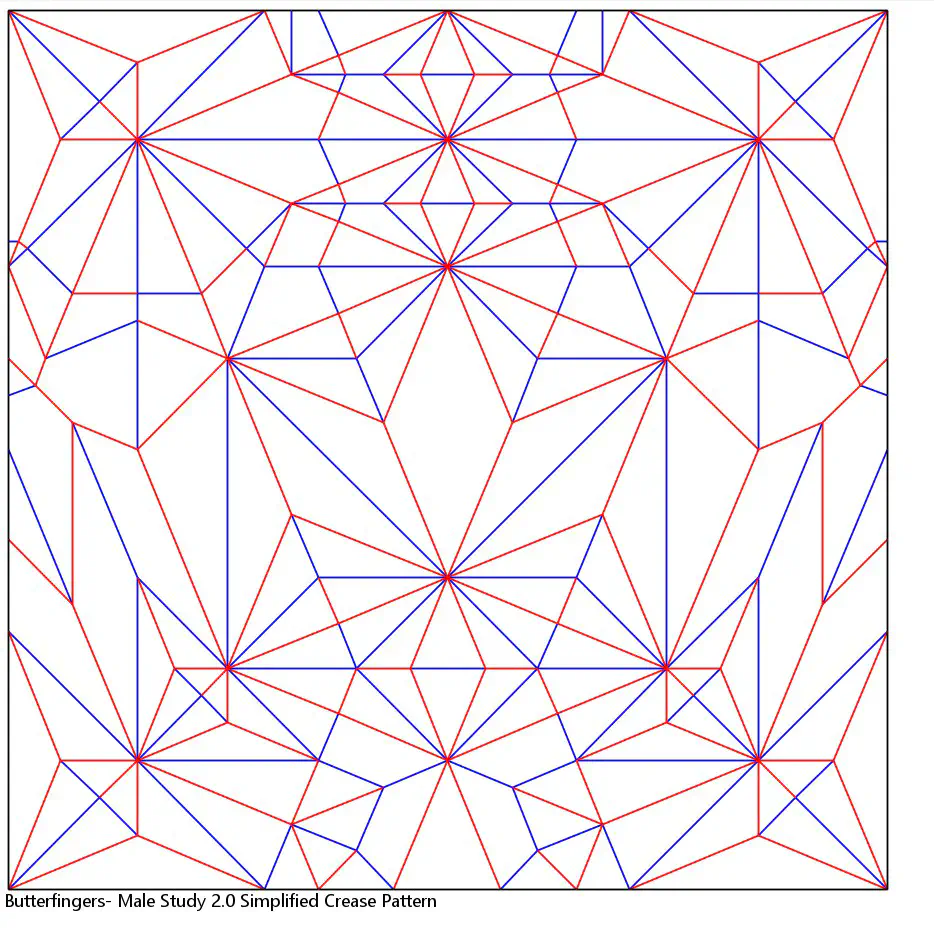
I liked the test fold I made quite a bit, but the legs and arms were too short.

I added a graft which resulted in version 2.0.